
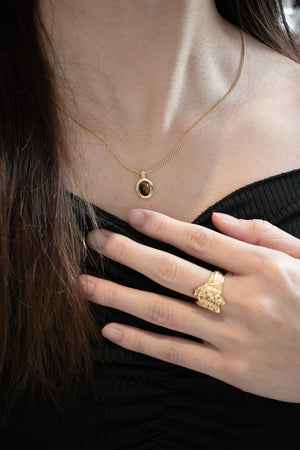



Rings are one of the most personal pieces of jewellery, but they’re also one of the easiest to overthink. With so many styles available, it’s not always obvious which type of ring suits everyday wear, which works best for stacking, or which is better saved for special moments.
This guide explains the most common ring styles, how they differ in real life, and how to measure your ring size comfortably at home, so you can choose with confidence.
Understanding Different Types of Rings
Each ring style is designed with a slightly different purpose in mind. Some are made to be worn every day without thinking, while others are designed to make more of a statement.
Stacking Rings
Stacking rings are usually slim, lightweight rings designed to be worn alone or layered together.

They’re popular because they’re flexible. You can wear one ring on quieter days or stack several when you want more detail. Because stacking rings are thinner, they tend to feel light and comfortable, even when worn all day.
Best for:
Everyday wear, mixing styles, creating a personalised look over time.
Chain Rings
Chain rings feature a linked or chain-style design that moves slightly with the finger.

They often feel more relaxed and organic than solid bands, but because of their structure, they’re best worn when you don’t need to use your hands heavily. Many people enjoy chain rings as a subtle statement or as part of a layered ring look.
Best for:
Light daily wear, styling-focused outfits, adding texture to a ring stack.
Gemstone Rings
Gemstone rings include any ring set with a natural stone, whether subtle or more prominent.
These rings often carry meaning or personal significance. When choosing a gemstone ring for regular wear, the height of the setting matters — lower-profile settings are usually more practical for everyday use than stones that sit high above the band.
Best for:
Meaningful jewellery, everyday wear with care, wearing as a focal piece.
Band Rings
Band rings are simple, solid rings with no central stone or raised detail.
Because of their clean shape, band rings are among the easiest rings to wear daily. They don’t catch easily, feel stable on the finger, and work well on their own or as part of a stack.
Best for:
Everyday wear, work settings, minimal and timeless styling.
Signet Rings
Signet rings traditionally featured engraved surfaces, but today they’re often worn for their flat, structured shape rather than symbolism.

Modern signet rings feel confident without being decorative. They usually work best when worn alone rather than stacked, offering a strong but understated presence.
Best for:
Everyday confidence, workwear, wearing one statement piece.
Statement Rings
Statement rings are designed to stand out. They’re often larger, bolder, or more sculptural in shape.

These rings aren’t usually intended for constant daily wear. Many people choose to wear them for specific occasions or when they want their jewellery to be the focus of an outfit.
Best for:
Occasional wear, events, expressive styling.
People may confuse what is the different between statement ring and gemstone ring
Although statement rings and gemstone rings can sometimes look similar, they serve different roles in how they’re worn and how they fit into everyday life.
How to Measure Your Ring Size at Home (UK Guide)
Getting the right ring size is essential for comfort. You don’t need special tools — just a little patience.
Method 1: Measure a Ring You Already Own
If you have a ring that fits the finger you plan to wear your new ring on:
-
Place the ring flat on a ruler
-
Measure the inside diameter from one inner edge to the other, in millimetres
-
Match this measurement to a UK ring size chart
This is the most accurate method.
Method 2: Measure Your Finger Directly
If you don’t have a ring to measure:
-
Wrap a thin strip of paper or string around the base of your finger
-
Mark where it overlaps comfortably (not tight)
-
Lay it flat and measure the length in millimetres
-
Match this to a UK ring size chart
This measures finger circumference.
When to Measure for Best Results
Finger size naturally changes during the day.
For the best fit:
-
Measure at room temperature
-
Avoid measuring when hands are cold or swollen
-
Measure later in the day rather than early morning
If you’re between sizes, most people find it more comfortable to size up slightly.
How a Ring Should Feel
A ring should slide on easily and feel secure once in place. It should stay on during normal movement but require a gentle twist to remove. Rings should never feel painful, tight, or restrictive.
Comfort always matters more than the exact size number.
Choosing a Ring That Fits Real Life
The right ring isn’t just about style — it’s about how it fits into your daily routine. Understanding different ring styles and sizing helps you choose a piece you’ll enjoy wearing, not something you’ll constantly adjust or remove.
With a little knowledge, choosing a ring can feel simple, natural, and enjoyable.